
A new funded project brings industrial by-products into circular value chains.
In industrial value chains, by-products have often been treated as waste. While companies optimize the procurement of raw materials and the sale of their main products, these material flows are usually disposed of, incurring costs instead of creating value. A key reason for this is the lack of reliable information on their origin, composition, and quality.
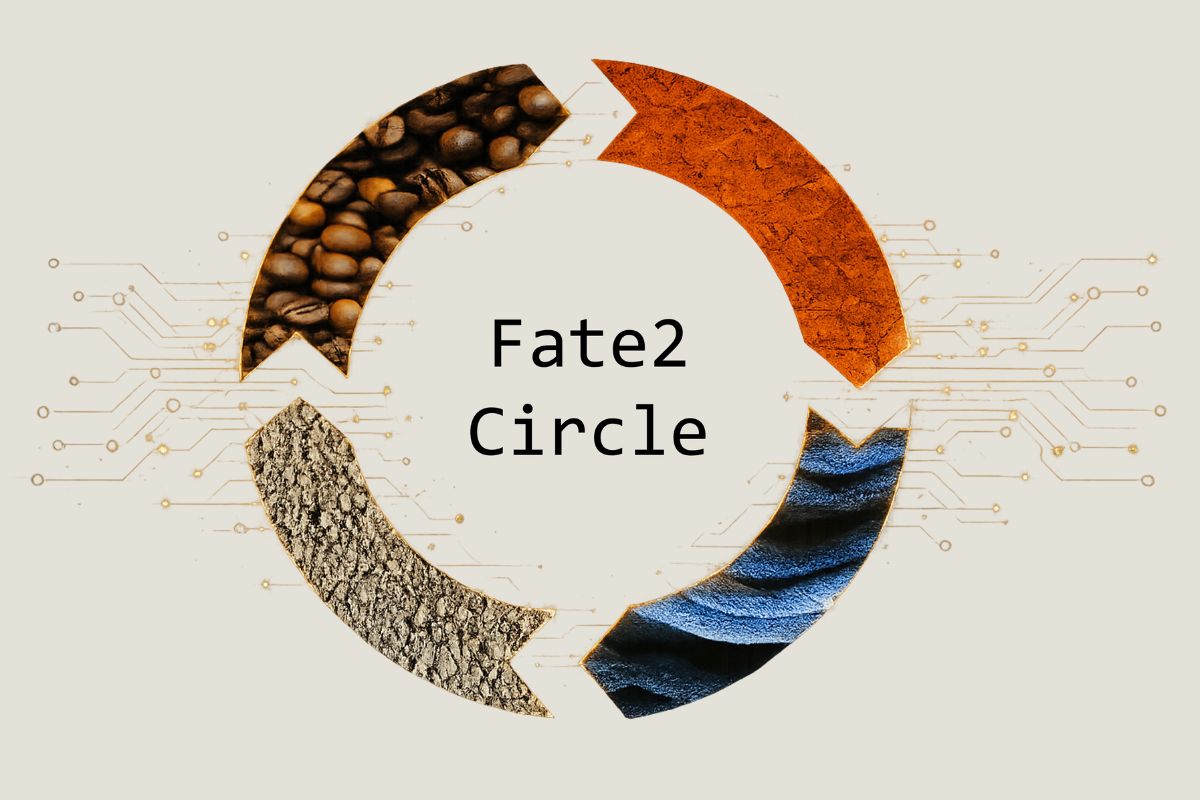
The development project, funded by the Federal Ministry for Research, Technology and Space (BMFTR), addresses precisely this issue. The goal is to replace linear disposal logics with circular recovery pathways. Based on verified digital material information, by-products are to become visible as tradable resources and be economically integrated into circular value chains.
Together with Fraunhofer IWM, Brain of Materials, Roteks Tekstil, and Wastespresso, EPEA will develop a prototype for an industrial marketplace over the next three years.
The goal is to establish an integrated digital infrastructure for circular material flows. This will enable systematic evaluation, targeted offering, and integration of by-products into reliable business models. Companies can thus reduce disposal costs, unlock additional revenue streams, and address regulatory requirements more systematically. The developed solutions are interoperable, transferable to other industries, and will prospectively lay the foundation for scalable, data-driven circular markets.
“The first Cradle to Cradle principle is: Everything is a nutrient, there is no waste. With this project, we aim to put this principle into economic practice. What arises as waste in one place can be a valuable nutrient elsewhere. Together with strong partners, we look forward to its implementation.”
- Jan Christoph von der Lancken, Managing Director, EPEA Industrie