.jpeg)
Client: Münchner Wohnen
Project duration: November 2022 – June 2023
Photographer: Paul Paulsen
Münchner Wohnen selected two properties scheduled for demolition in Ramersdorf and Moosach as pilot projects for urban mining. Reusable building components from the existing buildings were identified and documented in a component catalogue. Through a material exchange platform, roof tiles, doors, windows, handrails, and even parts of floor constructions are made available to private individuals, architectural firms, and manufacturers. In this way, building materials can be reused in new projects and remain in circulation.
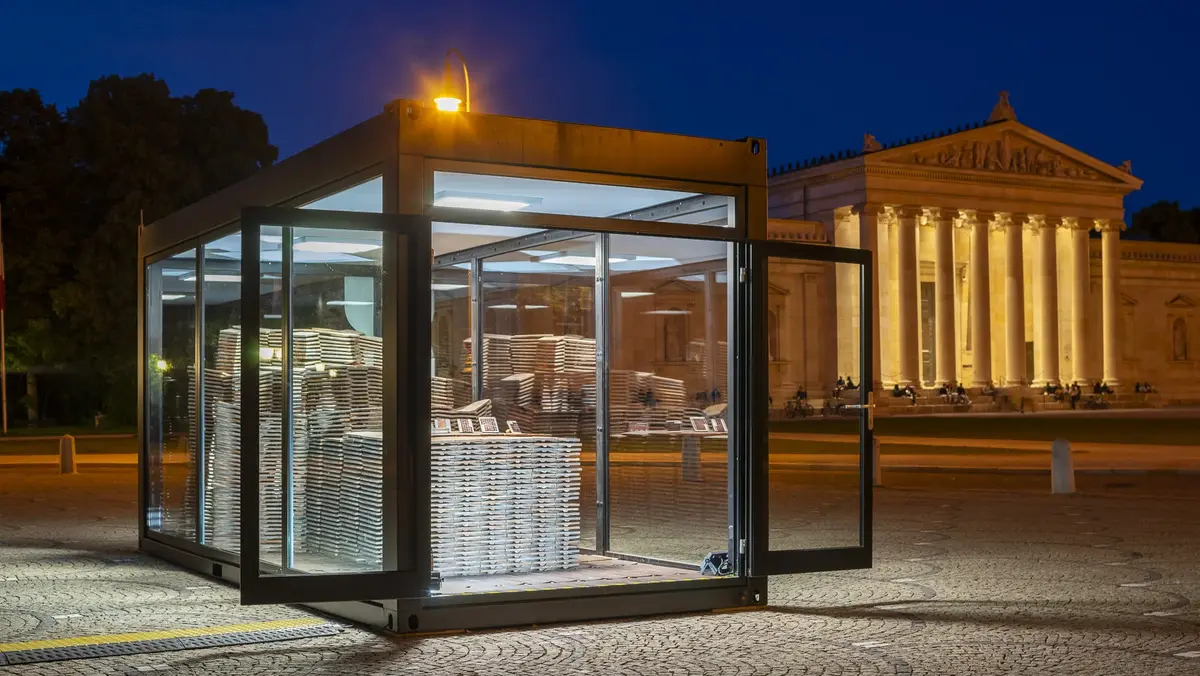
As part of Munich Creative Business Week 2024, the installation “Feierabendziegel” brought the topic of the circular economy into public space. Reclaimed beaver-tail roof tiles from demolished buildings were exhibited in a glass pop-up container. More than 2,000 visitors received creatively designed roof tiles and inspiration for the reuse of construction materials. The project was realized by the Drees & Sommer Brand Experience team together with EPEA GmbH – Part of Drees & Sommer and Münchner Wohnen.
The installation received two German Design Awards, in the categories “Circular Design” and “Fair and Exhibition.” The awards underline EPEA Drees & Sommer’s mission of connecting Cradle to Cradle principles with Urban Mining.